
My guest today on What Cathy Read Next is author April Howells whose debut novel The Unforgettable Mailman will be published on 21st April 2026 by Alcove Press and is available to pre-order now.
The Unforgettable Mailman is described as ‘a heartwarming story about intergenerational friendship and the power of human connection, perfect for fans of Fredrik Backman’. Personally it sounds really lovely but you can make up your own mind by reading the excerpt below.
About the Book
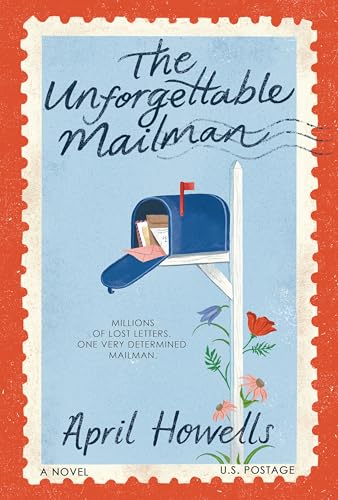
It’s never too late for the adventure of a lifetime, even if you can’t remember why you started.
1966, Chicago. Backlogged with millions of undelivered letters, the post office announces a temporary closure. But eighty-one-year-old Henry Walton can’t stand idly by when there’s mail waiting to be delivered. He believes letters are what keep people connected, and he’s not about to let them get lost in the chaos.
Plus, connection keeps the mind sharp – according to a note someone’s pinned up in his kitchen.
While the post office scrambles to get things under control, Henry races against time and forgetfulness. Taking it upon himself to deliver the mail, he discovers hatred and tragedy, triumph and joy in the letters he carries and the people he meets along the way.
Inspired by true events, this delightful story will linger with readers long after they turn the last page – and might just inspire someone to write a letter, the old-fashioned way.
Find The Unforgettable Mailman on Goodreads
Excerpt from The Unforgettable Mailman by April Howells
1
Thursday, October 13, 1966
10:03 AM
A note on the counter prompted Henry to shave every day. Another told him in faded ink that he should not, under any circumstances, try to use the iron. And one, scrawled on the back of an old paper bag, screamed CONNECTION IS CRITICAL TO KEEP YOUR MINDSHARP.
None of them explained where he’d put the stamps.
The letter to his son languished on the kitchen table, its bare corner a constant reminder of the missing postage. Leaning his cane against the wall, he tugged at the middle drawer. A squeal filled the room, expanded wood groaning at the disturbance. Shoving items out of the way— rusting scissors, loose matches, three rubber bands—he searched for the roll.
At the bottom, a fork stared up at him, out of place. There were no stamps.Henry’s chest tightened. Someone had stolen them. They’d climbed in through the window and taken them in the night. All he’d wanted was a light breeze, and now he was paying the price. The window would need to stay closed permanently.
And he would need to replace the pilfered roll.
The post office spanned two Chicago blocks. Henry took the steps oneat a time, careful not to trip. At the top, nine doors all led to the same lobby. He chose the third door from the left.
It was locked.
Moving over, he tried the next. By the time he’d checked all nine, his knee throbbed with the effort. Cupping a hand, Henry peered inside. Shadows floated through the expansive lobby, washing every thing out. With a huff, he tapped his cane on the window. The ting of wood on glass sounded hollow. Gripping the handle firmly, he banged louder: ten quick raps that echoed down the steps.
There had to be someone inside.
Minutes passed, and a dull ache pulsed its way up his arm. He lowered his cane, jaw clenched. Turning his back to the building, Henry took the first step, placing one foot down and then the next.
Behind him, someone grunted. “What?”
Henry spun around to find a rotund man in a security uniform leaning halfway out the door, drops of sweat dripping from his brow onto the limestone in tiny bursts.
“I need to buy some stamps.” Henry took the step again and moved toward the door.
The guard didn’t budge. “We’re closed.”
“Closed?” Henry repeated. It was the middle of the day.
“Yeah, closed. Shut. Not open.” Thick fingers wiped at a wet brow. Henry thought they looked like the sausages his wife, Elsie, liked to burn.
“I must be missing something,” Henry insisted, knuckles turning white on the handle of his cane. “I just need stamps.” It would only take a moment. No need to make a fuss.
“Like I said.” The guard dragged the words out, rather unnecessarily. “The post office is closed. There’s no one here to sell you stamps.”
Without waiting for a reply, the man squeezed his oversized body through the gap and slammed the door shut.
Henry watched him slouch away and tried to make sense of the news.
About the Author

April is a storyteller who finds heartwarming inspiration in little-known pieces of history. With a background in magazine publishing, she’s spent the last decade leading Global Internal Communications and Employee Engagement for premium apparel brand lululemon. Raised in southern Ontario, she now resides on the west coast of Canada with her husband and a Greater Swiss Mountain Dog named Chief. The Unforgettable Mailman is her debut novel. (Photo: Publisher website)
Connect with April
Website | Instagram




 What Cathy Read Next...